.png)
What is Sound Healing?
Sometimes the most powerful thing we can do is stop trying to understand everything and simply allow ourselves to experience it.
Walk into a sound healing session for the first time and you might wonder if you’re in the right place...
There are yoga mats spread across the floor, soft blankets folded neatly at the end of each one and crystal singing bowls waiting quietly at the front of the room. People arrive in silence, or close to it. Some are there because a friend recommended it. Others have seen snippets on social media and decided to see what all the fuss is about. A few are simply looking for an hour where nobody expects anything from them.
If you’ve ever felt curious but slightly intimidated by sound healing, you’re not alone.
It’s one of those practices that’s become increasingly visible over the past few years, yet for many people it still feels wrapped in mystery. Is it meditation? Is it music? Is it spiritual? Is there any science behind it? And perhaps the biggest question of all, what actually happens?
At Sondera, these are the kinds of questions we love asking. Not because we expect every answer to be black and white, but because the world of healing can feel overwhelming when you’re standing at the edge of it. Sometimes all we need is someone to make the unfamiliar feel a little more approachable.
So let’s start there.
What is sound healing?
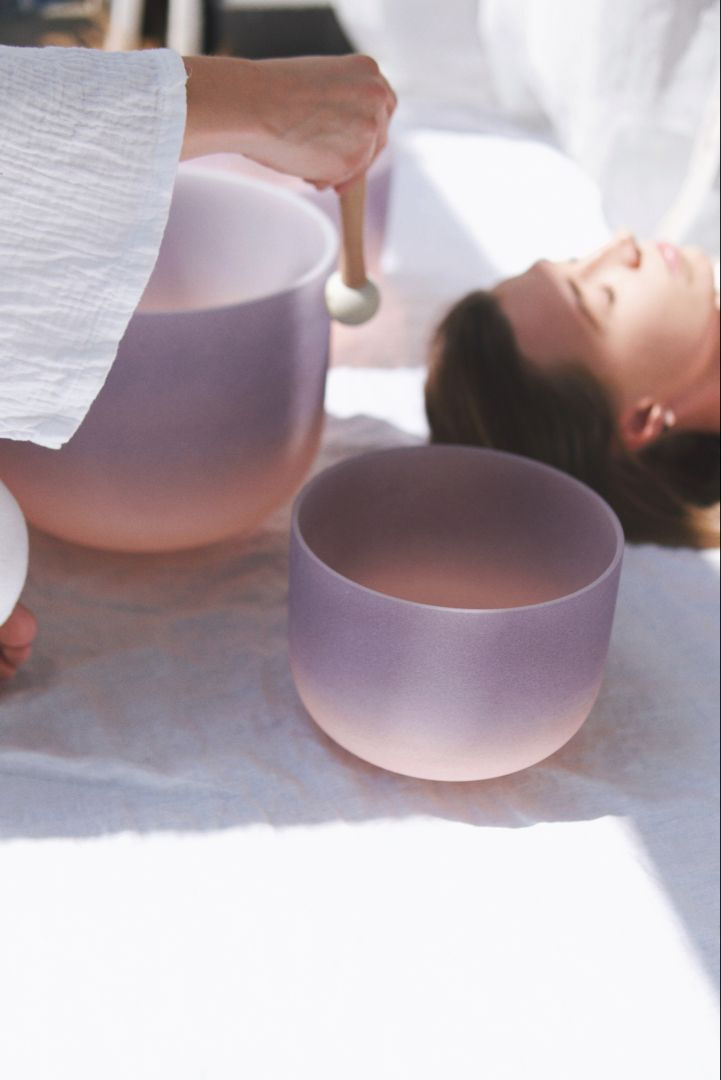
At its simplest, sound healing uses instruments, frequencies and vibration to create an environment that encourages deep relaxation.
You might hear crystal singing bowls, Tibetan bowls, chimes, tuning forks, drums or gongs. Each instrument produces its own unique tone, filling the room with layers of sound that seem to move around you rather than simply playing in the background.
Unlike a concert, there is nothing to watch. Unlike a yoga class, there is nothing to perfect. Your only job is to lie down, breathe and listen. For some people that’s surprisingly difficult.
We spend so much of our lives doing, solving, responding and achieving that an hour of simply being can feel unfamiliar. Yet that’s often where the experience begins.
Why are so many people drawn to it?
The last few years have changed the way many of us think about wellbeing. Words like nervous system, burnout, regulation and rest have become part of everyday conversations. More people are recognising that looking after ourselves isn’t always about adding another habit to the list. Sometimes it’s about creating space for our minds and bodies to slow down.
That’s one reason practices like sound healing have grown in popularity. For some, it’s an opportunity to meditate without feeling like they have to empty their mind. For others, it’s simply one of the few places where notifications stop, conversations pause and the outside world becomes quiet for a while. Everyone arrives for their own reason, and everyone leaves with a slightly different experience.
What does it feel like?
This is probably the question people ask most, and it’s also the hardest to answer. Some people feel deeply relaxed, almost as though they’ve woken from a very restful sleep.
Others notice emotions surfacing that they weren’t expecting. A memory might appear. Tears might come without any obvious explanation. Some people don’t feel much at all the first time, and that’s completely okay too.
There isn’t a right experience. There isn’t a wrong one either.
One of the beautiful things about practices like sound healing is that they invite us to let go of the idea that every experience needs to be measured or achieved.
Sometimes the most meaningful thing that happens is simply giving yourself permission to rest.
Is there science behind it?
Like many practices in the wellness world, there is growing interest in understanding how sound may influence relaxation and wellbeing.
Researchers have explored how calming sounds and meditative environments can support relaxation, reduce stress and encourage a slower heart rate in some people. At the same time, many of the bigger claims you’ll see online still require more research.
At Sondera, we’re comfortable holding both of those ideas.

We don’t think every experience needs to be explained away, but we also believe it’s important not to promise outcomes that can’t be guaranteed.
Healing is deeply personal. No single modality works for everyone, and no practice should be presented as a cure for every challenge life throws our way. That’s why we prefer curiosity over certainty.
Is sound healing for everyone?
Not necessarily.
Some people will absolutely love it. Others may discover they connect more deeply with breathwork, massage, journaling, nature, movement or talking therapy.
That’s the beauty of exploring wellbeing. It’s not about finding the best modality. It’s about finding what genuinely supports you. The goal isn’t to collect healing experiences like badges, It’s to understand yourself a little better along the way.
Where do you start?
If you’ve been wondering whether to book your first session, perhaps the pressure doesn’t need to be on having the perfect experience.
Maybe it’s simply about being curious. You don’t need to understand every frequency, or know the history of crystal bowls. You don’t need to arrive already believing anything - you just need to be open enough to discover how it feels for you.
Because sometimes reconnecting with ourselves doesn’t begin with finding the answer.
Sometimes it begins with making space to listen.
A note from Sondera
We created Sondera because the worlds of spirituality, healing and conscious living can feel noisy. There are endless opinions, endless trends and endless advice telling us what we should try next.
Our role isn’t to tell you what to believe. It’s to help you navigate the people, practices and perspectives that might help you reconnect with yourself.
Sound healing is one of many paths. Whether it’s the right one for you is something only you can discover!