.png)
Before Coffee, There Was Cacao

Inside the ancient roots, modern ritual and renewed interest in ceremonial cacao.
The first few times I drank ceremonial cacao, there wasn't much ceremony involved at all.
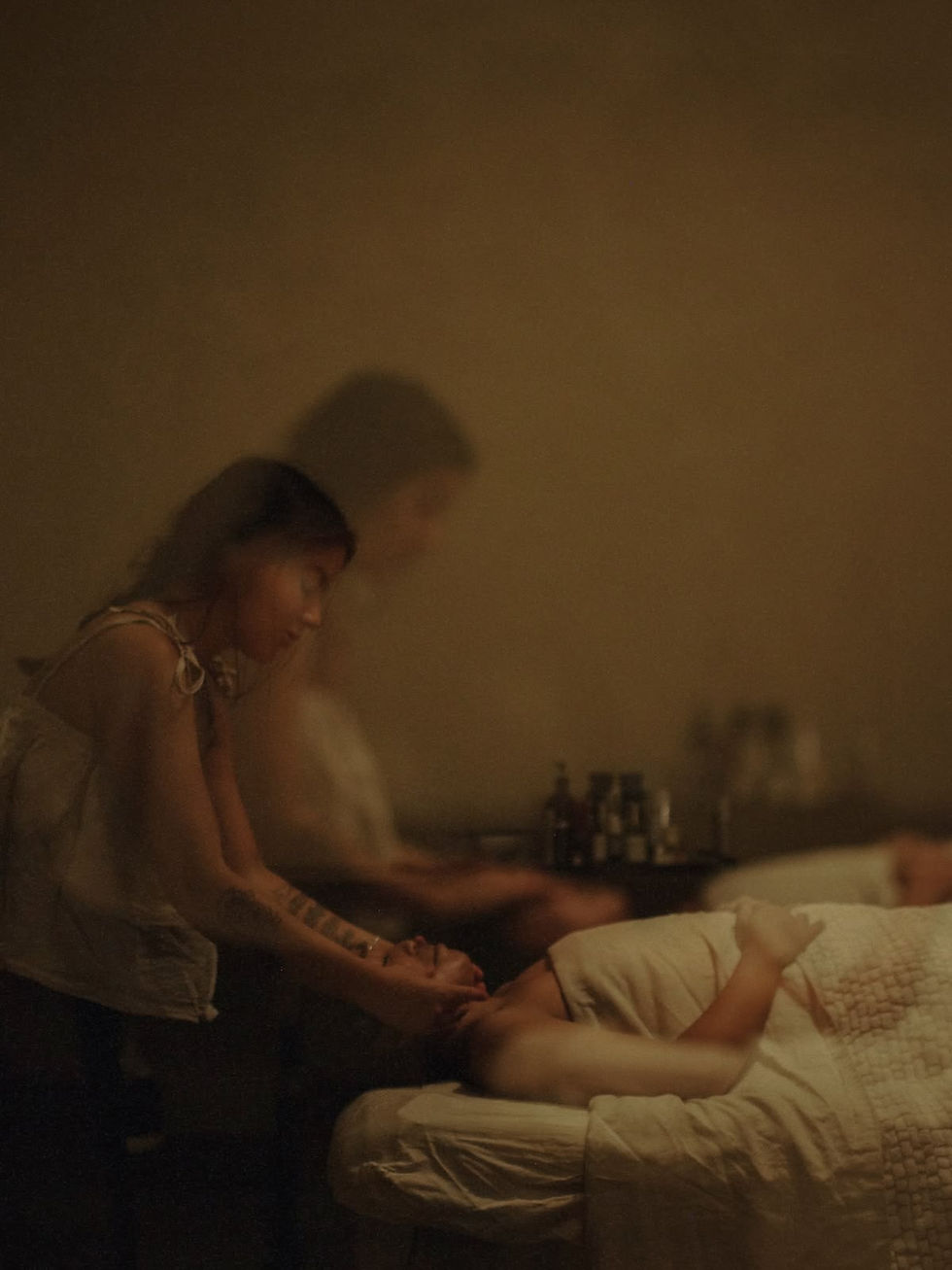
My mum had been drinking it for years, and whenever she stayed with me, I'd often end up with a cup too. More recently, I experienced cacao in a more intentional setting at one of her gatherings, alongside reflection, connection and sound.
Somewhere along the way, I realised I genuinely loved it.
There was the cacao itself - rich, earthy and completely different from the hot chocolate I'd grown up knowing, but also the ritual surrounding it. Making something slowly. Sitting down to drink it. Giving a moment your attention rather than consuming something absent-mindedly while moving onto the next thing.
And, naturally, it made me curious.
How did a plant with roots stretching back thousands of years become something we're now drinking at breathwork sessions, retreats and cacao circles? What makes ceremonial cacao different? And why, in the middle of very modern lives, are so many of us gathering around it again?
Long before the wellness trend
Cacao's story begins thousands of years before the modern wellness movement.
Archaeological evidence traces cacao use in the Americas back more than 5,000 years, with cacao later becoming deeply significant within several Mesoamerican cultures. It wasn't simply food. Cacao could be part of ritual, celebration, social life and exchange, taking on different meanings across cultures and periods.
For the Maya, cacao appears in art, vessels, feasts, marriage traditions and ceremonial contexts. Later, cacao beans also became economically valuable in parts of Mesoamerica, including as a form of currency and tribute.
And the cacao being consumed then wasn't the sweet, milky chocolate drink many of us might imagine. Preparations varied, but cacao drinks could be bitter, spiced and sometimes frothed, with ingredients such as chilli and other aromatics.
So while cacao's current popularity may feel distinctly modern, our fascination with this plant certainly isn't.

So, what actually is ceremonial cacao?
This is where things become a little less straightforward.
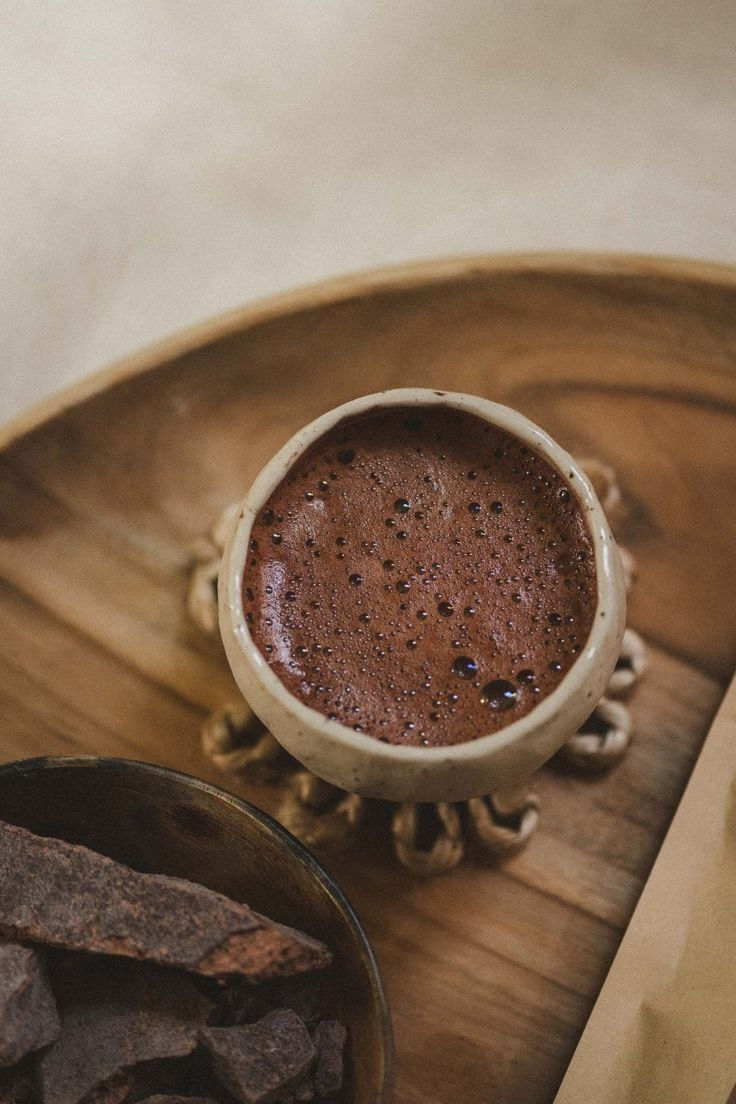
There isn't one universally regulated definition of ceremonial cacao. Today, the term generally refers to cacao that has undergone relatively little processing and retains the cacao solids and naturally occurring cacao butter, often sold as a paste or block that is melted into hot water.
That makes it quite different from the cocoa powder or drinking chocolate many of us have sitting in the pantry.
Processing matters because cacao naturally contains a complex collection of compounds, and the amounts that remain can vary considerably depending on how cacao has been fermented, roasted and processed.
Among them is theobromine, a naturally occurring stimulant in the same chemical family as caffeine, although it behaves differently in the body. Cacao is also a source of flavanols and contains minerals including magnesium.
Research into cocoa flavanols has found interesting effects particularly around cardiovascular and vascular function, although the amount of flavanols can differ greatly between cacao and cocoa products, so findings from a particular cocoa intervention can't simply be applied to every cup of ceremonial cacao.
But the physical properties of cacao are only one part of why people are drawn to it.
Why is cacao called a 'heart opener'?
Spend time around ceremonial cacao and you'll eventually hear cacao described as a heart-opening plant.
Within contemporary ceremonial and spiritual practice, people work with cacao in different ways. It may accompany meditation, breathwork, journalling, sound, movement, intention-setting or simply conversation. Practitioners may speak about it as supporting connection — with ourselves, with others or with something more spiritual.
The idea of the heart here isn't necessarily intended as a medical claim. It's part of the language and lived experience surrounding the practice.
And having now experienced cacao myself, I understand why that language resonates with people.
For me, there is something about the experience that feels inherently connective. You're holding something warm. You're slowing down. Often you're sitting with other people. You're being invited to pay attention to how you're feeling rather than rushing onto whatever is next.
Whether someone understands that through spirituality, ritual, the physical properties of cacao, the environment surrounding it — or some combination of all of them — will be personal.
That's part of what makes it interesting.
What happens at a cacao ceremony?
There's no single answer.
A modern cacao ceremony might involve sitting together and drinking cacao before meditation. Somewhere else, it might be paired with breathwork, sound healing, ecstatic dance, journalling, yoga or sharing in circle.
Some ceremonies are explicitly spiritual. Others are much simpler and centred around connection, reflection and slowing down.
It's also worth remembering that the contemporary cacao ceremonies appearing across the modern wellness world aren't one singular ancient ritual reproduced exactly as it existed thousands of years ago. Cacao has been used by different cultures in different ways across an enormous span of time, and modern practitioners may combine those influences with contemporary wellbeing and spiritual practices.
For anyone exploring cacao, that history is worth being curious about too — including where the cacao has come from, who has grown it, how it has been sourced and the traditions practitioners draw upon.
Respecting cacao's history doesn't make its modern evolution any less interesting. If anything, it makes the story richer.
Why cacao, and why now?
This might be the question I keep coming back to.
We're living in a time when almost everything is designed to happen faster. Coffee is often something we grab on the way somewhere. Meals happen in front of screens. Even wellbeing can become another thing to optimise, track or squeeze into an already full day.
And then there's cacao.
Warm something slowly. Sit down. Hold the cup. Set an intention if that feels right. Talk. Listen. Be quiet. Stay for a while.
Perhaps that's part of why it feels so relevant again.
We're seeing a broader return to ritual across the wellbeing world — not necessarily because everyone wants to adopt the same spiritual beliefs, but because there seems to be a genuine appetite for experiences that help us slow down, connect and give meaning to ordinary moments.
Cacao happens to sit beautifully at the meeting point of many of those things.
It's a plant with an extraordinarily long human history. It's physically complex enough to continue attracting scientific interest. It holds cultural and spiritual significance. And today, it's becoming part of new rituals created by people looking for different ways to gather, reflect and connect.
For me, what started as simply sharing a cup with my mum has become something I'm genuinely interested in exploring more.
Not because I think cacao holds all the answers.
But because there is clearly far more to this little cup than I first realised.
And perhaps that's the point.
Sometimes curiosity begins with something incredibly simple.
Even a cup of cacao.